Wednesday, November 25, 2020

ASSASSINS CREED 4 : Black Flag : Case study


Ownership and Franchise


Ubisoft Entertainment SA is a French video game company headquartered in Montreuil with several development studios across the world who owns Assasins creed. Ubisoft is the fifth largest publicly traded game company in the Americas and Europe in terms of revenue and market capitalisation. The most popular games from the franchise are Assassins creed II, Assassins creed black flag, Assassins creed Unity, Assassins creed Syndicate, and Assassins creed origins. With the latest instalment of the series being Assassins creed Valhalla which came out this year in 2020. The main story that links all the games in the franchise is that you are working for a big simulation company and each assassins creed game is a different simulation of a time period. The great thing about assassins creed is that you don't need to play the previous games to be able to play any of the recent ones as each in game story is different and follows a different protagonist. 


 Maximising income


During a certain period of time assassins creed became quite a success and so they created a movie adaptation of the franchise titled "Assassins creed" that was released in 2017. This  follows the character Callum and how, with the help of technology, he learns that he is a descendant of a society of assassins. He travels back in time to learn about his ancestor and acquire skills to defeat a evil organisation. Unfortunately unlike the success of the game the movie was not very successful with didn’t maximise their income like they would’ve hoped. It had ratings of 5.7/10 from IMDb and  the movie only made 240 million USD whereas blag flag made over 1 billion USD.


Marketing and advertising


Assassins creed uses a range of media to advertise their game, from trailers and adverts on the TV, to articles announcing the game in magazines or newspapers. A large part of the focus was the story in the game, which is what assassins creed is most popular for. The detailed and film like cinematics in this game are what makes assassins creed so special.. Assassins creed is also popular because of the history is shows, through correct representations of society in those time periods and a representative of how the scenery would off looked during that time period, using real places which is what people would’ve loved to see and it would appeal to a wider range of people. .


Maintaining and developing the audience


In the more recent games there is the addition of online multiplayer where people can complete challenges and quests together online and play with friends which makes it more interesting and fun to play. There is also a range of DLC's you can buy for your game to add additional content that doesn't come with the original game which would appeal to people. . This could include extra story missions to complete, extra clothes to customise your characters with, and sometimes the addition of new characters. These all help the player build a character they relate to or have fun creating. It also opens a world to a lot more possibilities.


Reception


Assassins creed black flag sold around 15 million copies to retailers and digitally as of 2020. While the assassin creed games usually have a good representation throughout each game and portray it well, one problem that still remains and the main issue is the game bugs. Ubisoft runs the games on Unity which isn't able to comprehend the graphics.


Regulation


Assassins creed black flag is a 13+ game because it contains scenes of violence, some strong language, and alcohol consumption.


Sunday, November 15, 2020

GAMES TIMELINE

COMPUTER GAME INDUSTRY 


key definitions:

  MMORPG - massively multiplayer online role-playing game

AUGMENTED
REALITY - The rendering of digital images or data onto real-world objects


PERSISTENT
WORLDS -  A virtual world


CRPG - Classical" Role Playing Game A subgenre of video games

AVATOR - an icon or figure representing a particular person in a video game

How have video games and consoles  changed through history?
Over time video games and consoles have definitely evolved over time, especially with video games over time they have become more realistic and When we compare the graphics of today’s games with the ones that existed in the 1990s and even the early 2000s it is a huge comparison. The games of those days do not have the sophisticated textures and the use of colour they used back then was very bold and colours that didn’t really go together. Video games have also changed in regards to graphics, as back then they didn’t have certain softwares to increase the quality and graphics so they were quite low. However,  today we have the necessary hardware that allows for greater pixels and shading on a massive scale. The increase of artificial intelligence has transformed the gaming experience. Back in the old days, in multiplayer games when you did not have anybody to play against and had to battle the computer, it was a dull and unpleasant experience. Nowadays, when you play these same types of games, the computer is much smarter and cunning trying to mimick human intelligence to make the gaming experience more realistic and better. 

Back then, certain games were either too easy that the audience would just get bored because the levels weren’t hard enough or too hard so that they would just quit. As time went on games and consoles evolved in appealing to the audiences pleasures and giving them a greater experience whilst playing the game. Various pleasures and experiences that games provide for the audience is the intense music which allows the audience to be interested and pay more attention to the game, the customisation of characters which allow the audience to choose what they want. Most of all the freedom of being able to do whatever they want and the use of multiplayer which adds to making friendships and making a game more exciting. Another aspect, is the completion of levels because it gives the audience a sense of accomplishment and encourages them to keep playing until they complete another level. 

Video games serve many other purposes like:
Entertainment - people playing games and use consoles for fun
Competing - Competing in games on a high skill level typically for prizes and possible against friends which make it more fun
Socialising - Many gamers meet new people on games and interact with thousands of people and in many cases friends are made over gaming.
Youtube/Videos about certain games - People create content for others to watch on video streaming website like youtube and  people gain entertainment from watching them and so does the person making the video, they can also make money in some cases. Also they can gain tips and tricks on how to play the game which could make the game more enjoyable.

  
GAME TIMELINE-

1940 – The first “video game”
Edward U. Condon invents a computer that plays a game, “Nim”, against human competitors. The computer won 90% of the time.

1985 – The Nintendo Entertainment System (NES) launches
Nintendo, a company originally founded in Japan as a playing card company during the late 1880s, got into the video game business in the 1970s and revolutionized the industry with NES. NES games were graphically superior to their predecessors, and the extra memory allowed for multiple levels and storytelling.

1988 – Gaming meets the real world
Developers started looking to the real world for new series. One example, the “Madden” football series—named after legendary NFL coach and broadcaster John Madden—has gone on to become one of the best-selling and longest-running franchises in America.

1989 - Sega Genesis launches + Gameboy
The next generation of consoles launched in 1989, when Japan-based game company Sega released the Genesis. This introduced us to another classic character: “Sonic the Hedgehog”. Sonic was seen as a more mature counterpart to Mario, helping win over older gamers.

1991- The competing Super Nintendo (SNES) was released.

1994 – The PlayStation is born
CD-based games could store massive amounts of data compared to cartridges, allowing developers to create longer, more sophisticated games. Classics like “Final Fantasy VII”, “Resident Evil”, and “Metal Gear Solid” showed the console’s then-newborn abilities.

1999 - Online gaming
The Dreamcast console released by Sega although not a hit featured the first signs of online gaming.

2001 - Microsoft creates a console
In 2001, Microsoft decided to get into the gaming industry, launching its own console, the Xbox. The original Xbox upped the ante in the console wars, pushing out companies like Sega and pitting Microsoft against stalwarts Nintendo and Sony.

2006 - Wii was released by Nintendo 

2004-2009 - Other types
Outside of consoles, PC gaming fostered growth for massively multiplayer role-playing games (MMORPGs), including “World of Warcraft”. These games allow thousands of players to play at once, interacting with each other and even cultivate their own insulated economies.

2009 – present – Mobile games
Mobile gaming also started taking hold with the release and popularization of social and phone-based games like “Farmville” and “Angry Birds”. Later mobile games would start driving massive revenues, like “Clash of Clans”, “Mobile Strike” and “Candy Crush”.

2010 – present – eSports
Started in the early 1990s, eSports has exploded in popularity. In eSports, professional players compete against each other in popular games like “DOTA 2”, “League of Legends”, and “Counter-Strike: Global Offensive”. Like other sports leagues, eSport athletes earn big salaries from sponsors and spectators who pay to watch.

Present
Virtual reality and more realistic games are now becoming more popular where it feels as if you're in the game and have more control of what happens.


Saturday, November 7, 2020

Exam Question

Analyse the representation of gender in the music videos for "The Man " by Taylor Swift and "Riptide " by Vance Joy      ( 30 marks / 800 words minimum)

In both of these music videos gender is represented in similar ways, in "Riptide" and “The man” portray women as having less relevance and having less acknowledgement than men. Also, in her music video she emphasises how if she was a man she would gain more respect and be more heard in society especially in business. Women are shown to be vulnerable, insignificant and as a victim in “Riptide”.

 In certain areas and scenes of the music video it challenges the typical stereotypes of women as being submissive and weak. An example of this is when we see the woman breaking free from the tree that she was tied to which may suggest to the audience that she was being tortured, representing men as aggressive figures and as a bully. Another aspect is the use of low camera angles to suggest how women have power and strength which challenges the stereotypical view of women as being passive. There wasn't many stereotypes about men as this video was solely focused on portraying women. 

This contrasts with "The Man" by Taylor Swift as the main message and ideas that she tries to portray is the double standards of men and women and comparing the two. In her music video she plays the role of a successful business man who has a daughter. In the opening frame we see the main character in his office staring out his windows in between the words 'the man' which could suggest that he's the man everyone looks up to and wants to be like. This asserts his dominance as a man which could also be inferred from how he's looking out into the world from the window which could show how because he's a man he has power in the world unlike women who are stereotypically insignificant.  

The second shot is him giving orders to his employees and being praised by them which shows their admiration for him. This scene links to the representation of men because men are more likely to be praised in work areas whereas women have to work harder. Her music video links in with Stuart Halls theory of representation and emphasise his beliefs that stereotypes usually come about when there is inequality, for example between men and women and usually when there are people in power, typically from the hegemonic groups in society.


Next we see, when he is on the train and his legs are wide open and he is smoking whilst sitting in between two women not even caring. This shows the difference in men and women and how gender is represented because if a women did that it is seen as un-lady like and women have so much ideas to conform to and standards to uphold. This further contrats with the men because no one would even think any different if a male sat with their legs open and started smoking because of how society thinks. The passengers remained silent represent how society overlook many bad and dishonourable things that men do. In society and Taylor Swift’s music video men are represented as being under less pressure and can just do whatever they want and the women will be passive and let it slide. This compares with “Riptide” because throughout the video the audience notices that the women is being tortured which is conveyed though the horror like iconography and certain scenes. The women in this video fight back and help herself out of the situation which shows that women can stand up for themselves and be powerful.

We see how men are praised more than women as it is unexpected for men to carry out certain tasks for example, when the man was sat in the park with his daughter all he did was lift her up and he announced the worlds greatest dad but if a women was to do that it wouldn’t be anything special or something to congratulate. This again shows the audience society’s outlook on the two genders and how gender stereotypes play a key part in representation. 

Furthermore, in “The Man”, and in “Riptide” women are being sexualised particularly in the beginning scene of “Riptide”. In this scene the use camera angles play a key part as it is recording her body and her face isn’t being shown. This resulting in the fact that she potentially has no idea that she is being recorded. This gives the audience the impression that women aren’t valued or being respected within this video. Women are objectified  to a certain extent. This is also evident in a scene in “The Man” where women are sexualised which is when they are on the boat celebrating and the rich protagonist is surrounded by lots of women only dressed in bikinis and their use of flirtatious body language towards the camera as well as the male figure during the close ups emphasises women’s objectification. Also, with them laying on the floor and him standing amongst them shows how he holds greater status and power and is superior to them. Reinforcing stereotypes that the male gender is more dominate against females.

In both music videos they link to Van Zoonens theory that women are objectified as a result of western culture, but are shown in different ways in each video. In “The Man” women are objectified as not being appreciated for the work that they do and being less acknowledged then men. Whereas, in “Riptide” women are objectified as nothing but pure objects used for their bodies and for  others pleasures which intertwine with the ‘male gaze’ to send messages to a greater audience.


However, there are also aspects of representation of gender in both videos that differ from one another. In "The Man" Swift presents how men hold a stronger hierarchy than women and are more interesting. This is shown through the fact that throughout the whole video the main protagonist is a male character. Although there are still female actors in the video there are very minimal camera action towards them and is predominantly concentrated on the male character. Relating to society today this portrayal isn’t seen out of the ordinary because men are still seen as a more important gender in comparison to females. This follows the audiences expectations of the narrative because they already have an idea as to what the video would be based around due to the title of the music video. This relates to Halls Theory that stereotyping occurs when there is a representation of inequality of power, which in terms of “The Man” is completely true, as the stereotyping used in this video asserts full power to the male gender with more emphasis due to the use of the lyrics as well. 


On the other hand, “Riptide” show men as having no importance due to the lack of male characters used and the absence of them throughout the video. This  challenges the audience’s expectations because the lyrics imply that the narrative would be from a male perspective. Whenever a male character is shown it isn’t used in a positive representation. The absence of a male  portrays how women don’t need to have a man present in order to be/do certain things & in this aspect, to be objectified. This goes against Halls theory where stereotypes occur when there is an inequality of power because although a male character is absent from the video the director is still able to make women come across as weak and defenceless in the eyes of the media, through the theme of domestic abuse occurring repetitively throughout the video. The use of close up camera shots and dark, mellow lighting in certain scenes this emphasises how she would seem scared and afraid. This Contrats to “The Man” where both genders are used consistently in the video to portray the inequalities of power through stereotypes. 


Friday, October 23, 2020

Advert

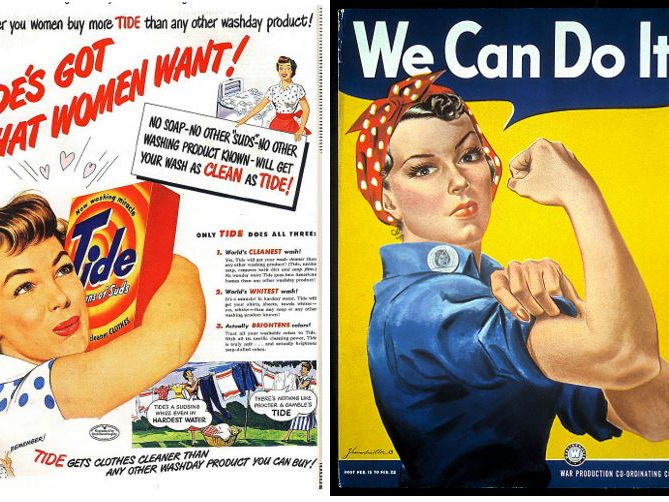
 Tide Print Advert

A-level Media Studies SOLO Taxonomy comparing representation in Tide and  another advert | Teaching Resources


These adverts reinforce the typical stereotypes that women are only valuable in regards to cooking and cleaning and taking care of the house as a housewife. In tide, women usually had hairstyles that were out of their faces yet still always had a full face of makeup, her red lipstick could signify love. The use of bright colours which attract attention to her and the product. Throughout this advert a variety of codes are used to express and symbolise different meanings.


Code Used

Connotations It Has

The gesture code of the woman hugging the Tide product. 

This has connotations of relationships and love and the product is presented as having an important role in her life. 

 The use of superlatives, for example in ‘World’s cleanest wash’ 

 This has connotations of dominance and shows a sense of excitement. 

The use of happy expressions of the women displayed in the adverts. 

This shows how women were supposed to be submissive and do as they were told especially with house work. The expressions also show how in love she is with the product. 

The use of clothing that the women wore were seen as a trend and fashionable at that time.

This expresses how women were only allowed to wear dresses or skirts because trousers were seen as clothing for men and it was a typical fashion for women during the 1950s.

The use of colour used primarily in the advert is red, bright and bold colours.

This has connotations of how the women were deeply in love with the Tide product and that it was the only laundry detergent that they used. 

The text ‘Tide’s got what women wants.’ 

This has connotations of how buying Tide is an essential need on becoming the perfect housewife. 


The Tide advert is aimed towards a stereotypical 1950's mainstream female audience. The advert follows David Gauntletts theory of identity, as it gives a depiction of women to the target audience and would encourage them to be more like her. 

To attract its audience it uses various different technical codes such as the use of strong primary colours, large font size so that it would stand out in a magazine. The use of hyperbole and exclamation marks make the product seem like a 'must have'. Furthermore, it would appeal to the typical housewife as it was the 1950's a clean and perfect home was ideal. The woman in the advert is happy and attractive which allows the audience to think that if they buy the product they'll be happy too. The language in this advert is colloquial, using an American informal tone to mimic the style that women in that era would've talked. 

This advert links to the Cultivation theory, this theory surrounds the idea that the more an individual watches tv the more they start to believe it and see it as a depiction of reality. This could apply to the Tide print advert as it involves the repeating of images to allow it to stick in your mind. It also follows Tunstalls theory of femininity falling under the domestic category this is because women are strongly associated with 'home tasks' and the connotations that come with it.

Monday, October 19, 2020

Vance Joy

 Riptide music video


Throughout the majority of the music video, there are various literal translations. For example, when the line discussing the riptide is sung, a visual representation of a riptide is presented on screen. This causes the video to appear with a more simplistic view; essentially helping the audience to further engage. With this image being repeated every time the chorus is played, the audience see this image a lot which fits in with Steve Neale's Genre Theory- when he discusses the repetition within a genre.


During the beginning of the music video, we see bright colours which help the audience feel happy and up - beat. The background being a beach can cause nostalgia and the audience could relate to their happy times at the beach. However as the video goes on, the colour palette darkens to match the lyrics and the images. There is also a sense of horror which links in with iconography.


Representation

Women in Riptide are seen to be mostly objectified and victimised in some way, we see this in various scenes for example, when the woman was tied to a tree an another scene which looked like she was being tortured. Throughout the video high camera angles are used to make women seem smaller and insignificant. Terrified facial expressions and dark lighting create an atmosphere of fear, as though women should be scared as well as victimised. Therefore, the representation of women in those shots are stereotypical as they are seen as weak and helpless. The representations in this video often make audiences feel uncomfortable, which encourages us to see the victimisation of women as undesirable. This could be suggested by the scene by the women with bruises and blood on her face. As the camera is very close up to her face and its quite a long take which could make it hard to look away from and could force us to question why it is happening. The sections of fast paced editing when the women are being tortured, dragged and abused create representations of women that seem scared and jumpy. In the scene when the woman is able to untie herself from the tree which could represent how some women act as their own 'hero' in the music video, creating more powerful and independent representations of women. Another example of positive representation is when there is a low camera angle which suggests that women are strong and dominant. In the media women are usually sexualised and certain shots throughout the video only show specific parts of women's bodies which dehumaises them and makes them appear like objects to be admired. The main focus in the video is on women and representing them, therefore there isn't any representations of men or many shots of them, as the main theme is violence against women.


Genre and Audience

The indie genre often takes an unconventional approach to many things such as media language and representation. Independent music (often referred to as indie music or indie) is music that is produced independently from commercial record labels. It is self-published music that can be categorized into diverse genres. The term ‘indie’ or ‘independent music’ can be traced back to as early as the 1920s after it was first used to reference independent film companies but was later used as a term to classify an independent band or record producer. A few examples of well known indie artists are Arctic monkeys and Twenty one pilots. Vance Joy fits into the category of indie music because he produces his own songs and he fits into more than one genre.


Narrative and Iconography

Throughout the music video there isn't one main narrative, however its gets the narrative from its lyrics and iconography and has a linear structure. Most of the imagery is very literal to the lyrics but as we go  on in the video sometimes the imagery is metaphorical. This is shown when there is a shot of a dollar note which connotes to the lyric 'all my friends are turning green'. This could symbolise greed or being green with envy. Throughout the music video, it frequently references thriller genres but mostly uses horror genre  iconography for example, females being repeatedly dragged off the screen  by unseen forces. This idea could link with Steve Neale’s Genre theory.

Postmodernism

Riptide is a postmodern text, we see certain aspects of this throughout the video especially intertextuality, for example the horror film style that the music video shows when the girl unites herself from the tree which makes us think she has been kidnapped or tortured. Also how we are positioned deliberately in a distressing and confusing situation. Reflexivity is also another postmodernism technique that is used to break the fourth wall an example of this is when they use a fake film that doesn't exist and we are aware of this.  Also because they show a cassette tape being pushed into a recorder this is a reminder of olden times as technology has moved on as we are now using CD’s or mobile devices. Intertextuality is also used through the mise-en-scene which suggests the conventions of an Western film. 


Monday, October 12, 2020

Dizzee Rascal

 Dream Music Video Analysis


His music video begins with a camera shot of pastel coloured alphabet blocks which is a reference to childhood which subverts the stereotypical expectations of a hip-hop/rap and grime music video that would generally showcase money and sexualise women and their bodies. The second shot is of an old woman seated at the piano who could be interpreted as someone who is from the upper class. 

Next, Dizzee is seen emerging from a music box as a miniature figure which could imply that the old woman views black people as inferior to her. Many binary oppositions are also present in this music video in regards to the woman and Dizzee Rascal which at times show the hierarchies of power in society. Despite his success she still manages to retain power as he gets back into the box at the end.

 A stereotypical scene is shown when a camera shot is showing the puppets graffitiing the wall and causing trouble for the police which implies how reckless the younger generation is. When Dizzee raps, "Not knowing for reality that I'd have to prepare 'cause money don't grow on no stick," this emphasises how despite reaching a high status of fame, money never lasts forever but only for an amount of time. The music video has a grey undertone which creates an old-fashioned theme. 

There are many props used throughout his music video with various hidden meanings such as when he begins to use the microphone at the point when he raps about discovering music. The microphone has connotations to power as his voice can now be heard (literally and metaphorically), this signifies a move away from rebellion and towards achieving his dreams and becoming a respected member in society. 

The main narrative and message of the song is the constant battle of the hierarchy between black and white people and how the older woman is clearly seen as bigger and more respected. The woman is seen staring down at the puppets, who are representations of the youth. 

In the music video it is emphasised that the older woman is someone from the upper class whilst Dizzie is portrayed as being from a lower class. This is shown through their contrast in outfits, for example Dizzie is wearing a red hoodie which connotes his rebellious and wild behaviour. The red could also represent danger or crime which many people associate with young people. The woman uses dainty gestures whereas Dizzee used flashy gestures representing their difference in  culture. The neighbourhood also shows a stereotypical view of the youth and how people perceive young people to be  also in the music video and Dizzzie is the only one seen without strings which could imply he is rebellious and defiant.

Another aspect of the music video is her facial expressions which are quite significant because in the music video she displays some uncomfortable facial expressions and body language. This could represent her lack of understanding or empathy for Dizzie’s circumstances and could possible reflect on some mainstream views and feelings on race. The multiple scenes of illegal activity throughout the music video shows typical representations of young black men as being involved in crime.

When this video was released there was many worries and concerns with anti social behaviour especially with young teenage boys. As a result of this the government tried to put a ban on people wearing hoodies. Therefore, this video reflects the context of the fears in the 2000’s of young people’s behaviour in society. Later on, the hoodie became associated with crime and was seen as a symbolic code for young people that weren’t going to follow the rules.

The Dream music video subverts some of the common stereotypes of youth, class and ethnicity in some places. We see this particulars towards the end of the music video when he’s seen a a positive role model when he’s dancing and singing and talking about his success. Dizzie is a character in this video who challenges the ideas and stereotypes of his ethnic group. As a young black man stereotypically people view black people especially men as always struggling and not having much to offer. Furthermore, when the woman is seen to be smiling and nodding at Dizzee this encourages the audience to see him as an approved role model.    

A key scene is when he’s in the music studio and the radio station and the police are outside but they can’t get in and are banging on the windows. This could be suggesting that  Dizzee Rascal’s relationship with the pop and grime genres has protected him from being the victim of racial violence.  Later on, we see the policemen dancing with Dizzee and the puppets which could symbolise how music has kept him safe and brought everyone together. Also, this could signify that music can overcome barriers of race, class and age.

The women is a character that challenges the stereotypical views of gender in some ways. She is portrayed as being dominant and powerful, with control over Dizzee. However, she is also seen as as well behaved and nice in contrast to him which is seen as more of a  conventional representation of women. 

Lastly, the content of this music video could be linked to the ideology of Postcolonism created by Paul Gory. The idea of Postcolonism states that despite us not having colonies anymore representations of certain groups are still affected by that time. It is linked to Dizzee Rascal’s music video because he express the way young black people are still being portrayed and represented as a specific way which is in a negative stereotypical way despite what we are truly like. This has been affected from years ago of how certain group are perceived and still are seen to be. 


PRODUCTION: Producer research

 BBC3 is best suited to my brief and the genre that I will be producing, especially as its target audience is 16-34. BBC3 was a british free...